
Flat Roof Problems in South Florida: Ponding, Blisters & More
October 6, 2026| admin
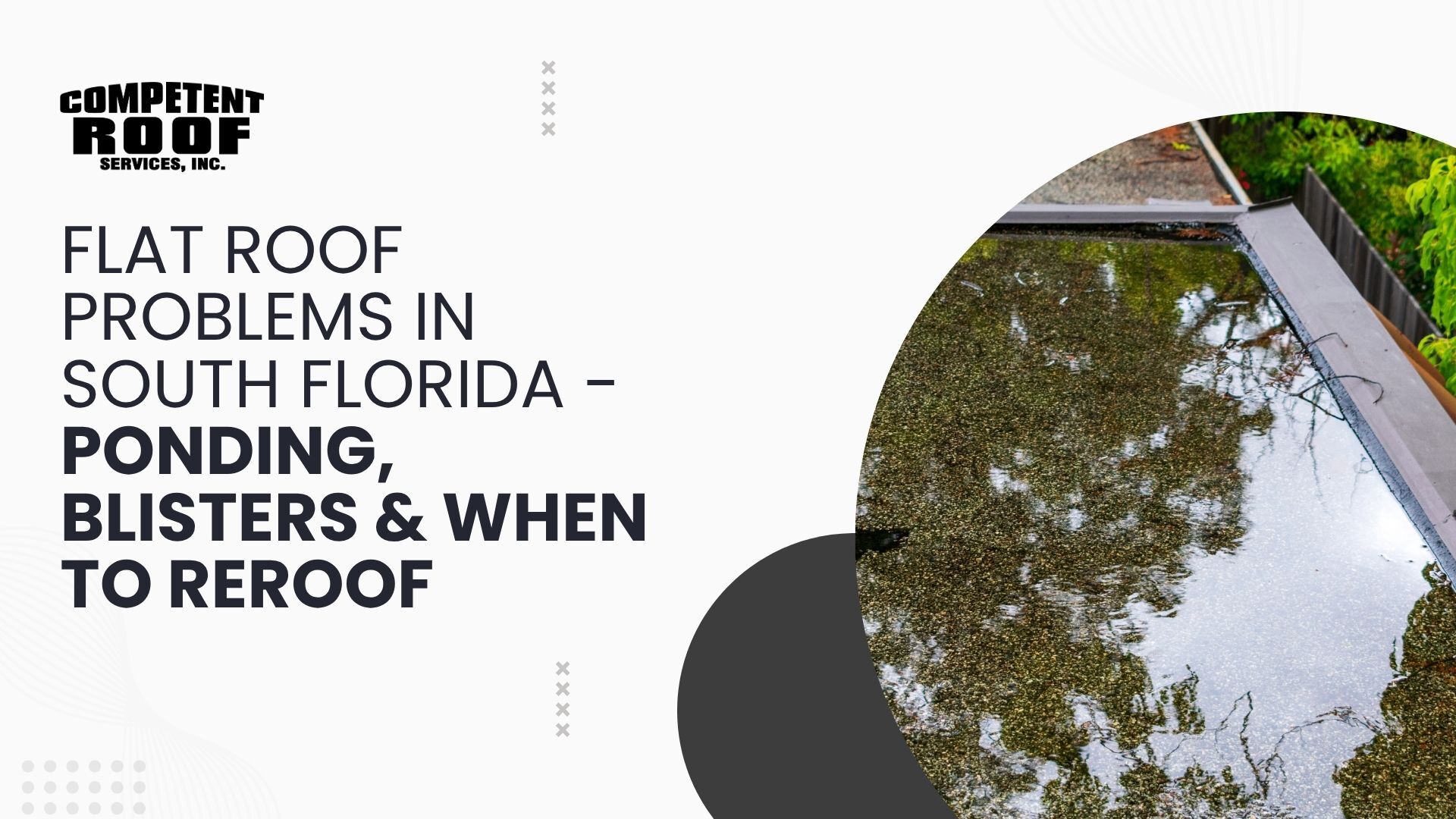
Flat Roof Problems in South Florida: Ponding, Blisters & When to Reroof
Flat roof problems in South Florida often develop from constant moisture, poor drainage, intense UV exposure, heavy rainfall, and high humidity. Ponding water, expanding blisters, recurring leaks, and visible structural deflection can indicate that a roofing system needs more than a simple repair. The right response depends on the location and extent of the damage, the condition of the existing system, and whether the underlying structure remains safe. Competent Roof Services can help homeowners and commercial property owners in Palm Beach County address roofing concerns with appropriate repair or replacement work when needed.
Why Flat Roofs Struggle in South Florida's Climate
South Florida’s flat roofs face intense sunlight, frequent rain, high humidity, and tropical weather throughout the year. The local wet season typically runs from May through October, while Atlantic hurricane season runs from June 1 through November 30. These periods can bring heavier rainfall and storms, putting additional pressure on flat-roof drainage systems.
UV radiation can gradually affect the flexibility and weather resistance of roofing membranes. During the wet season, heavy rainfall can quickly expose drainage problems. If drains or scuppers cannot move water efficiently, low-slope areas may retain water for extended periods, increasing the risk of ponding and moisture-related damage.
High humidity creates another challenge. Moisture that enters the roofing assembly can take longer to dry, increasing the potential for deterioration of insulation, decking, and other components. For South Florida property owners, scheduling roof maintenance and addressing drainage issues before the wetter months can help identify potential problems before periods of heavier rainfall and storm activity.
Ponding Water: Causes and Risks
What Causes Ponding Water?
Ponding occurs when water remains on a roof after rainfall instead of draining away efficiently. Several conditions can contribute to it:
- Low-slope areas: Poor drainage design or localized depressions can leave sections of the roof holding water.
- Blocked drains or scuppers: Leaves, dirt, and debris can restrict drainage.
- Inadequate drainage capacity: Existing drainage may not handle heavy rainfall effectively.
- Structural deflection: Long-term loading or movement can create low spots where water collects.
The National Roofing Contractors Association uses 48 hours as a general reference point when discussing excessive ponding, while recognizing that drainage expectations can vary with the roofing system and conditions. Persistent water accumulation should therefore prompt an evaluation rather than automatically being treated as normal roof behavior.
Why Ponding Water Damages Your Roof
Water that remains on a flat roof for extended periods increases moisture exposure and adds weight to the roofing assembly. Repeated ponding can contribute to membrane deterioration and create conditions that make leaks more likely.
The greater concern comes when standing water appears repeatedly or alongside cracked membranes, deteriorated seams, damaged flashing, or structural movement. Fixing the drainage problem may matter just as much as repairing the visible roofing defect.
Blisters: What They Signal
What Causes Blisters?
A roof blister forms when air or moisture becomes trapped within or between roofing layers. Heat can cause the trapped material to expand, creating a raised area beneath the membrane or roofing surface.
Blistering does not always mean the entire roof has failed. The size, location, number, and condition of the affected areas provide more useful information than the presence of one isolated blister.
Why Blisters Matter
Small blisters may remain localized without immediately compromising the waterproofing layer. Larger blisters or areas that continue to multiply deserve closer attention.
A blister that breaks open can expose the roofing system to water. If moisture has already entered beneath the surface, covering the visible defect alone may not resolve the underlying issue.
Repair vs. Reroof: How to Know Which One You Need
A single leak does not automatically mean you need a new roof. The decision should consider the condition of the entire roofing system rather than one visible defect.
Roof age: Many common flat-roof systems have expected service lives in the range of 15–20 years, although actual longevity varies by material, installation quality, maintenance, exposure, and weather conditions.
Leak frequency: One isolated leak may remain suitable for repair. Leaks that continue appearing in different locations can indicate wider membrane or flashing deterioration.
Ponding: Occasional water after heavy rainfall differs from persistent or recurring ponding. Continued accumulation may require drainage corrections as well as membrane work.
Blistering: A small number of stable blisters presents a different situation from widespread blistering, damaged blister surfaces, or moisture affecting multiple areas.
Structural condition: Visible sagging or significant deflection deserves prompt professional evaluation because the issue may involve the roof deck or supporting structure rather than the membrane alone.
Florida’s 25% rule: If 25% or more of an older roof section needs repair or replacement, Florida code may require bringing the entire section up to current standards. Roofs built or replaced under the 2007 Florida Building Code or later are exempt, so only the repaired portion must meet current code.
What Happens If You Delay Reroofing?
Delaying necessary roofing work can allow moisture to travel beyond the original problem area. Water intrusion can damage ceilings, walls, insulation, and interior finishes. Continued moisture can also contribute to deterioration of roof decking and other components beneath the membrane.
A problem that starts in one section may eventually require more extensive work if leaks go unchecked. That can increase the project's scope and cost. Roof condition can also become relevant when dealing with homeowners insurance. Rather than assuming that a future claim will cover deterioration or an aging roof, check your policy and understand what conditions and causes of loss it covers.
In Florida, notice of a property insurance claim generally must be given within one year of the date of loss, and many policies exclude damage from leaks that continue for 14 days or more, which is another reason not to ignore a recurring flat roof leak.
Get a Free Quote Before Small Problems Grow
Don't wait for recurring leaks, ponding water, or worsening blisters to turn a manageable roofing issue into a larger project.
Competent Roof Services has 40+ years of experience serving South Florida and provides roofing services in Palm Beach County, Lake Worth, Wellington, and Boynton Beach. Contact us at (561) 433-9190 to discuss your flat roof needs and receive a free quote for your roofing project.
Whether you need repairs or are considering a new roofing system, getting an estimate can help you understand the potential scope and cost of the work. FL License: CCC1333695.
FAQs
How long does a flat roof last in South Florida's climate?
The lifespan depends on the roofing material, installation, maintenance, drainage, sun exposure, and weather conditions. Many flat-roof systems have service lives around 15–20 years, although some can last longer with proper care.
Can you walk on a flat roof with ponding water without causing damage?
Avoid unnecessary foot traffic on a flat roof, particularly when water is present. Some membrane systems can suffer damage from repeated or improper foot traffic, and wet surfaces also create a slip hazard.
Does homeowners insurance cover flat roof leaks in Florida?
Coverage depends on the policy and the cause of the leak. Sudden covered damage may receive different treatment from wear, deterioration, maintenance issues, or excluded causes. Check your policy or speak with your insurer before assuming a leak will qualify for coverage.
What roofing materials handle South Florida heat and rain best for flat roofs?
For South Florida’s hot, sunny climate, light-colored, reflective roofing systems can help reduce solar heat absorption. Common options include white TPO and PVC membranes, granulated modified-bitumen cap sheets, and reflective roof coatings. These materials can provide good weather resistance while helping reflect more sunlight. EPDM is also used on low-slope roofs, but traditional EPDM is usually black and absorbs more solar heat, making it less common when high solar reflectivity is a priority. The right roofing system still depends on the building’s design, drainage, existing roof assembly, exposure, installation requirements, and applicable building standards.
How much does flat roof reroofing typically cost compared to repair?
Repair costs can vary considerably based on the defect and affected area, while reroofing involves a much larger scope of work. Roof size, membrane type, removal requirements, insulation, decking, drainage corrections, access, and local labor rates all influence the final price, so an on-site evaluation provides a more useful estimate than a generic cost figure.