
10 Warning Signs You Need a New Roof in Wellington, FL
August 24, 2026| admin
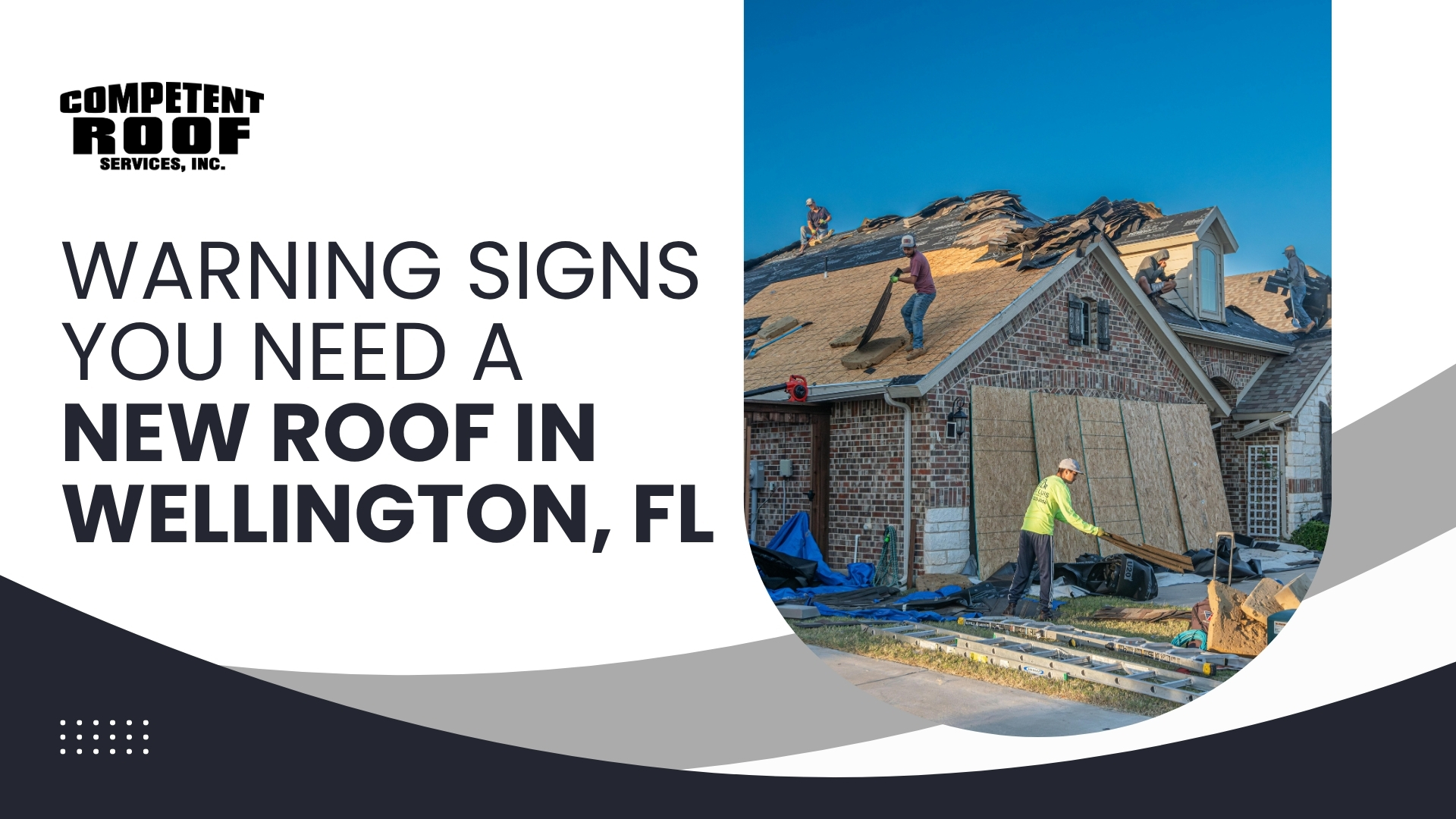
Warning Signs You Need a New Roof in Wellington, FL
Wellington homeowners face roofing problems that are not as common in other parts of the country. Like much of Palm Beach County and South Florida, the city has a tropical climate that has two main seasons: a warm, dry season and a hot, rainy season. Winter is mild and comfortable, that has a lower humidity. January is mostly known as the coolest month, with average high temperatures of around 75°F (24°C) and lows near 55°F (13°C). However, winter days can still reach up to 83°F (28°C).
It creates perfect conditions for algae, moss, and moisture damage. Over time, these problems can even shorten the life of the roof by various years. For example, a 30-year architectural shingle that can last longer needs to be replaced after 20-25 years. Similarly, a 3-tab shingle that can last around 20 years starts showing damage after about 15 years.
Knowing these warning signs of roof damage can help you take action early. It is also important to know which problems need quick attention and which can wait for a scheduled inspection. When you know about these problems early, it can help prevent major structural damage and expensive interior repairs.
Repair or Replace? How to Determine the Best Solution for Your Roof.
How Wellington's Climate Can Cause Roof Damage?
Frequent Rain and Damp Conditions
Wellington experiences regular rainfall throughout the year. When a roof stays damp for long periods, moisture can slowly weaken the roofing materials. Repeated cycles of getting wet and drying out can also cause roofing materials to wear down faster.
Moss, Algae, and Other Growth
The city’s damp climate can create good conditions for algae, moss, and other organic growth, mostly on the shaded areas of the roof. If left untreated, moss can hold moisture against the roofing materials and contribute to deterioration.
Strong Coastal Winds
Wellington is known for its strong winds. Regular exposure to the wind can loosen or damage roofing materials over time. When there is loose flashing, damaged times, and lifted roofing materials, these allow water to enter the home.
How To Prepare Your Roofing for a Hurricane (South Florida Prep Guide)
Salt Air and Coastal Exposure
Homes near the coast are mostly exposed to salty air that can contribute to corrosion and rust, especially on metal fasteners, roofing, and flashing. Regular cleaning and maintenance can help reduce the effects of salt buildup.
Changing Temperatures
Wellington's weather can change quickly when there are cool nights followed by warmer days. These temperature changes can cause roofing materials to expand and contract. Over time, that repeated movement can even lead to gaps, cracks, and other signs of wear and tear.
Can Extreme Heat Shorten Your Roof's Lifespan? Warning Signs
What Are Some Of The Warning Signs?
Missing Shingles
Missing shingles are the most common problems that arise after a strong storm, and they should be addressed early. You will see an empty space where a shingle has blown off, and it can look like a dark rectangular gap in the roof.
Shingles can help protect the layers under your roof. When one is missing, the underlayment and roof deck are exposed to the rain and moisture. Wellington's wet and windy weather can make the problem even worse, which also increases the risk of water damage.
When a missing shingle only needs a repair:
- Only a few shingles are missing
- The roof is relatively new and in good condition.
- The underlayment is still in good shape.
- Nearby shingles are flat, secure, and undamaged.
When you think a new roof is needed, check for several missing shingles from different areas, cracked, loose, or curled shingles. Even if only one or two shingles are missing, you need to get them repaired. If you leave the area exposed, it allows the water to get under the roof and even causes more damage.
Book an Inspection for Curling or Buckling Shingles
Shingles can curl upward at the edges or appear raised in the middle. Where curling is severe, it becomes visible from the ground, and smaller problems may need a closer inspection. As shingles age, they can lose their flexibility. Any changes in temperature and moisture can cause the different layers of shingles to expand and contract at different rates. Over time, it can cause the shingles to curl or buckle.
Curling shingles do not sit flat against each other. It can create gaps where rainwater can get under the shingles. Wellington's weather can make the problem even worse. When there is frequent rain, damp conditions, and changing temperatures, these can put extra stress on the roofing materials.
Signs Your Wellington, FL Roof Needs Quick Repair.
Cracked Shingles
Mostly, you see thin or obvious cracks that run across the surface of the shingles. Some cracks can be easy to spot, and others need a closer inspection. Over time, roofing materials can become less flexible.
When there is exposure to sunlight, changing temperatures, moisture, and general aging, it can cause shingles to crack and become brittle. Cracks even allow water to get below the shingles and reach the layers underneath.
In Wellington's wet climate, even a small crack can become a bigger problem if you do not treat it properly. Cracks only need repair when a few shingles are affected, the damage was caused by something specific, and the rest of the roof is new and in good condition.
However, it needs a replacement when cracks are visible across larger areas of the roof. There are various sections of the roof that get affected, and the shingles are old and showing other signs of deterioration.
Cracked Roof Shingles? Get Professional Roof Repair in Palm Beach County and South Florida.
Too Many Granules in Your Gutters
When you clean the gutters, you find a large you will find a large amount of dark, gritty material that looks like sand. You will also notice the material near the ends of your downspouts.
The small granules on asphalt shingles can help protect the roof from sunlight and weather. Some granule loss is very normal, mostly when shingles are wearing out. You will also notice areas on the roof where the shingles look lighter or smoother than the surrounding areas. It can mean the protective granules have worn away.
Summers in Wellington are hot, rainy, and humid. July is mostly the hottest month, with temperatures reaching around 92°F (33°C) during the day and dropping to about 75°F (24°C) at night. Summer is also hurricane season in South Florida, which makes heavy rain, strong winds, and storms much more common during that time.
Wellington's damp conditions can contribute to granule loss. Moss and other organic growth can develop on roofs in damp, shaded areas. When that growth spreads, it can loosen and remove the granules from the surface of the shingles.
Keep Your Wellington Roof in Good Condition
Your roof can protect your home from Wellington's wind, rain, and changing weather. So, even small problems should not be ignored. Missing or curling shingles, cracks, moss, granule loss, and lichen can all be a sign that your roof needs attention.
Regular inspection and timely repairs can help prevent minor issues from turning into expensive water damage. If your roof is showing some warning signs or is getting older, a professional inspection can help you decide if a repair or full replacement is the better option.
Don't wait for a leak to tell you there is a problem. It is important to check your roof early to protect your home and extend the life of your roofing system.