
Will Your Roof Pass a Florida Insurance Inspection?
September 30, 2026| admin
If you’re a Florida resident, your roof can face insurance issues just like roofs in any other state. Storm damage, deterioration, visible defects, or other roofing problems can affect your insurer’s decision to renew or provide coverage.
Roof age alone doesn’t automatically make a roof unacceptable. Florida law provides specific protections for older roofs, including an inspection process for certain roofs that are 15 years or older. If your policy is up for renewal or your insurer has requested an inspection, a professional roof assessment can help you understand your roof’s condition and prepare for the inspection.
Why Florida Insurers Inspect Roofs So Closely
Florida's hurricanes, high winds, and heavy rain can put significant stress on residential roofs. Insurers may consider factors such as roof age, material, visible condition, damage, and repair history when deciding whether a property meets their underwriting requirements.
The inspection requirements can vary by insurer and property. Some homeowners may be asked to provide a roof inspection, while others may need a 4-point inspection covering the roof, plumbing, electrical system, and HVAC.
What Inspectors Actually Check
Roof age can affect an insurance evaluation, but an older roof isn’t automatically uninsurable. Florida law generally prevents an insurer from refusing to issue or renew a homeowners policy solely because a roof is less than 15 years old.
Insurers may also consider the roof’s current condition, remaining useful life, and whether it meets their underwriting requirements. A well-maintained older roof may be viewed differently from one with significant damage or deterioration.
For roofs that are at least 15 years old, Florida law requires insurers to allow homeowners to obtain an inspection by an authorized inspector before requiring roof replacement based solely on age. Licensed roofing contractors may qualify as authorized inspectors if the insurer approves them. If you need this type of inspection, working with Competent Roof Services can help you assess the roof’s condition and document its remaining useful life.
Shingle Condition
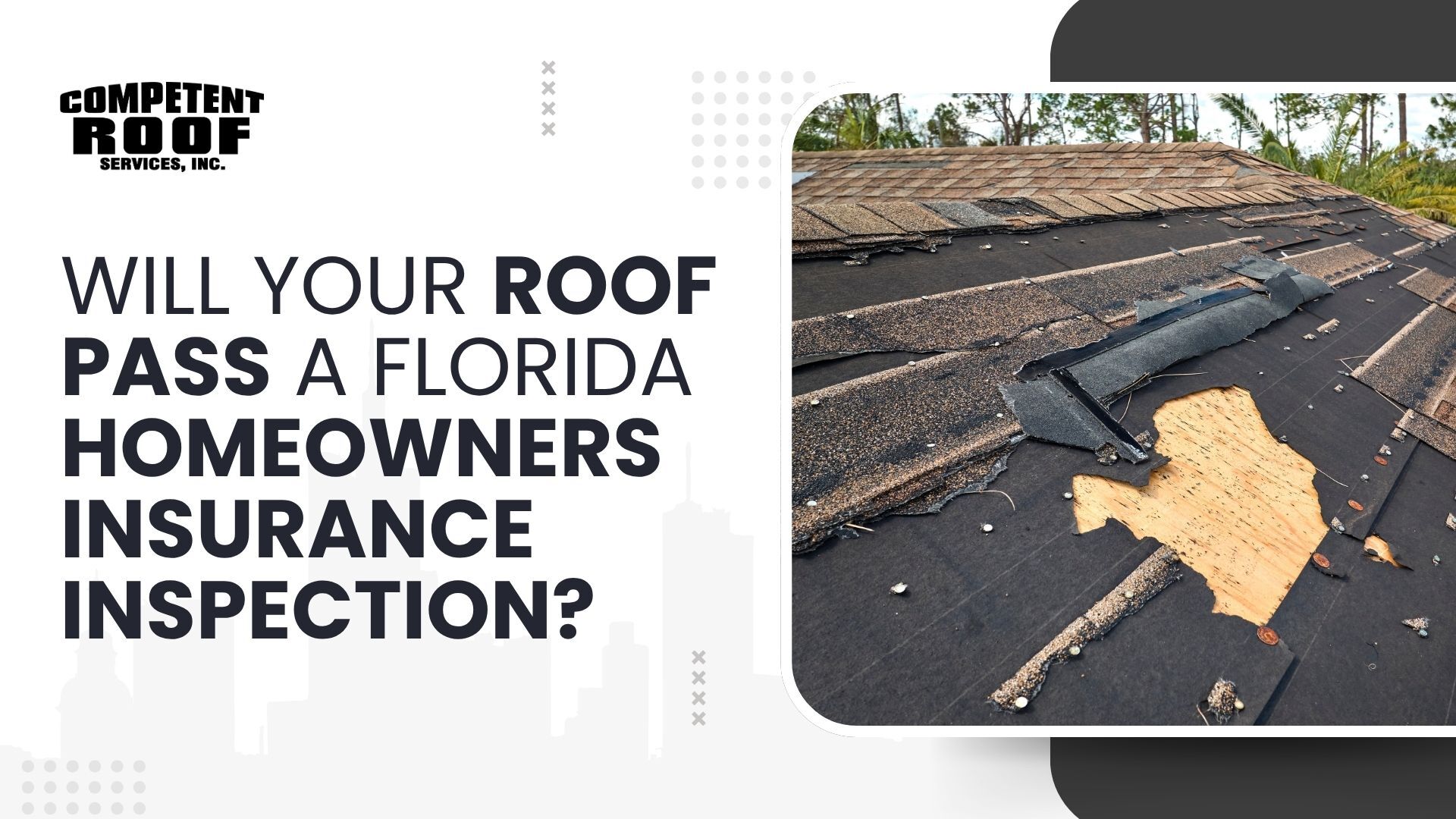
For asphalt-shingle roofs, an inspection may identify visible deterioration or damage such as:
- Missing, cracked, broken, curled, or lifted shingles
- Excessive granule loss
- Exposed fasteners
- Damaged or deteriorated roofing components
The condition of the roof matters alongside its age. A relatively newer roof with significant damage may still require attention.
Flashing, Seals, and Vent Boots
Inspectors may also examine areas where roofing materials meet other components of the home.
Potential concerns can include:
- Damaged or deteriorated flashing
- Failed seals around penetrations
- Damaged vent boots
- Improperly repaired roof penetrations
These areas can become potential paths for water intrusion, particularly when defects have been left unaddressed.
Evidence of Leaks or Previous Repairs
Visible water damage, stains, or evidence of previous leakage can prompt additional questions about the roof's condition. Previous repairs may also be reviewed, particularly when they involve storm damage. Keeping invoices, permits, photographs, inspection reports, and other maintenance records can help document what work was completed and when.
Structural or Deck Concerns
Visible sagging, deterioration, or other structural concerns can require further evaluation. An inspector may note conditions that suggest prolonged moisture exposure or deterioration beneath the roof covering. The appropriate response depends on what the inspection reveals and what the insurer requires.
Common Reasons Florida Roofs Raise Insurance Concerns
A roof doesn't necessarily have to be completely worn out before an insurer identifies a problem. Common concerns include:
- Significant deterioration: Extensive wear can affect the remaining useful life of the roof.
- Unrepaired storm damage: Missing or damaged roofing materials can remain an underwriting concern when left unresolved.
- Poor repairs: Temporary or visibly inadequate repairs may raise questions about the roof's current condition.
- Moisture-related problems: Persistent moisture can contribute to deterioration of roofing and other building components.
- Maintenance issues: Debris, blocked drainage, or other neglected conditions can contribute to roof problems.
When homeowners use the phrase “failed insurance inspection,” they may be referring to an insurer identifying conditions that don't meet its underwriting requirements, requesting repairs or documentation, or determining that the property doesn't meet its criteria for coverage. It isn't necessarily a simple pass-or-fail test.
How to Prepare Your Roof Before the Inspection
If your insurer has requested an inspection, don't wait until the inspection date to find out what condition your roof is in. A professional assessment beforehand gives you time to understand potential concerns and address issues where appropriate.
Use this pre-inspection checklist:
A little preparation can help you spot problems before the insurer does.
1. Review your roof’s condition
Look for visible signs of wear, damaged shingles, loose materials, failed seals, flashing issues, or other problems that may need attention before the inspection.
2. Fix repairable damage
Address damaged shingles, loose materials, failed seals, or other issues found during the assessment.
3. Gather roof records
Keep permits, installation records, repair invoices, warranties, photos, and past inspection reports in one place.
4. Clear debris and maintain drainage
Remove accessible leaves and branches. Keep gutters and drainage paths clear to help prevent moisture problems.
5. Document storm repairs
Keep photos and contractor records for any previous storm-related repairs.
6. Get a pre-inspection assessment from Competent Roof Services
Competent Roof Services can assess your roof before the insurance inspection, helping you identify potential concerns early and giving you time to address them.
For roofs 15 years or older, Florida law provides a specific inspection process when an insurer seeks replacement solely because of the roof’s age. The homeowner is responsible for the cost of the inspection, and the inspection must be performed by an authorized inspector approved by the insurer. Any required inspection must also meet the applicable statutory and insurer requirements.
What Happens If Your Roof Doesn't Meet the Insurer's Requirements?
If an insurer identifies a roofing or property concern, the next step depends on the specific finding and the carrier's underwriting rules.
You may be asked to:
- Complete specified repairs
- Provide additional documentation
- Obtain another inspection
- Address a condition within a specified timeframe
- Meet other underwriting requirements
An insurer may also decline to issue or renew coverage for lawful underwriting reasons. Florida's roof-age protections don't prevent an insurer from considering other underwriting criteria or lawful reasons for rejection or nonrenewal.
The important thing is to find out exactly what the insurer identified. A professional roofing assessment can then help determine whether the issue involves repair, replacement, documentation, or another type of evaluation.
Get Ahead of Your Roof Inspection
Get Ahead of Your Roof Inspection
Don’t wait until an insurance inspection reveals a roofing problem. Get your roof repaired and maintained on time with Competent Roof Services, serving Palm Beach County and Lake Worth, before your policy renewal or scheduled insurance inspection. Give yourself time to identify potential concerns, complete appropriate repairs, and organize your roof documentation.
Competent Roof Services also provides wind mitigation services to help Florida homeowners understand and document features that may qualify for insurance discounts.
Get timely roof repair, maintenance, and wind mitigation services and be prepared for your Florida insurance inspection.
FAQs
How often does Florida require a roof inspection for insurance purposes?
There isn't one inspection schedule that applies to every Florida homeowner. Requirements can vary by insurer, property, roof age, policy, and type of inspection requested.
Does a new roof automatically pass a Florida insurance inspection?
No. A newer roof can still have visible damage, installation concerns, documentation issues, or other conditions that don't satisfy an insurer's underwriting requirements.
Can I get insurance with an older roof in Florida?
Yes, it is possible. Florida law provides specific protections concerning roof age, including an inspection option for roofs at least 15 years old. However, insurers can still consider other lawful underwriting factors.
What's the difference between a 4-point inspection and a wind mitigation inspection?
A 4-point inspection evaluates major home systems, including the roof, electrical, plumbing, and HVAC. A wind mitigation inspection documents features designed to reduce hurricane-related wind damage and may support premium discounts.
Who pays for the roof inspection, the homeowner or the insurance company?
It depends on the inspection. Florida DFS states that the insured or applicant pays for a 4-point or specialized inspection, while the insurer pays for its own underwriting inspection. A homeowner normally pays for a wind mitigation inspection, although an insurer pays if it elects to reinspect.