
Florida Roof “Remaining Useful Life” Inspection: What It Is and How to Pass It
November 13, 2026| admin
From the driveway, your roof may look fine. Your insurance company, however, may want proof. For most homeowners in Florida with an older roof, the Remaining Useful Life (RUL) inspection is now a common request at renewal time.
The letter may come as a surprise, especially if it includes a deadline. However, an inspection is easier to manage when you know what it involves, what the inspector will check, and what you can do if the findings are not what you hoped for. In this blog, we have put it all in plain language, so you can make the right decision for your roof.
What Is a Remaining Useful Life Roof Inspection?
In Florida, a remaining useful life roof inspection is a focused visual review that estimates how many more years your roof covering can perform before it needs replacement. The inspector documents the roof's condition and puts the estimate in a written report, often with photos, that you send to your insurer.
Unlike a full roof assessment or repair estimate, this inspection does not price out work or guarantee the roof will stay leak-free. It is also separate from a wind mitigation inspection, which records qualifying features that help resist wind, such as roof-to-wall connections, opening protection, and roof-deck attachment. A property may need either report or both.
The report generally identifies the type of roof, material condition, apparent defects, signs of previous repair, and an opinion on remaining useful life when the roof condition supports one. Insurers may use this information to decide whether they will write, continue, or modify a policy.
Why Do Florida Insurers Ask for It?
Florida insurance carriers pay close attention to roof condition because roof failures can lead to costly water intrusion claims. A roof that is worn out, broadly damaged, or affected by unresolved water leaks raises concern, even when the rest of the property is well maintained.
Insurance requirements vary. One carrier may request a roof certification because of the roof’s age, while another may request one after reviewing a 4-point inspection. Some insurers set different roof age limits by roofing material. Citizens, for example, uses one limit for shingle roofs and a longer one for tile, metal, and other hard roofs. A new roof is not automatically problem-free, and an older roof is not automatically uninsurable. Installation quality, maintenance history, storm exposure, visible wear, and repair condition all matter.
Florida law sets a baseline. An insurer cannot refuse to issue or renew a homeowner’s policy solely because the roof is less than 15 years old. If the roof is 15 years or older, the insurer must let you have it inspected by an authorized inspector at your own expense before requiring replacement. If that inspection shows at least five years of useful life remaining, the insurer cannot refuse coverage based on roof age alone.
The report also helps the insurer decide whether to renew your policy, change your premium, or require repairs before renewal. Requirements differ from one insurer to the next, so read your letter carefully. Look for the required minimum remaining life, the deadline, and who can perform the inspection.
How Inspectors Estimate Remaining Useful Life
To estimate a roof’s Remaining Useful Life (RUL), inspectors compare how long it has been installed with its present condition and environmental exposure.
- Roof age and material: Asphalt shingles, concrete or clay tiles, metal roofs, and flat roofing systems each have different lifespans. Age sets the starting point for the estimate.
- Surface condition: Missing shingle granules, curling, cracks, blisters, and brittleness show that the material is nearing the end of its useful life.
- Flashing and penetrations: Seals around vents, chimneys, skylights and walls are common failure points, so they get close attention.
- Roof deck and structure: In accessible areas, the inspector checks the decking for soft spots, sagging, and signs of moisture.
- Past repairs: Patches and mismatched materials show how the roof has been maintained, and where problems have returned.
- Drainage: Standing water, blocked gutters, and poor runoff can reduce a roof’s lifespan.
The inspector then signs and dates the report and attaches photos of each roof slope so the insurer can see the condition behind the estimate.
Roof Conditions That Can Cause an Inspection to Fail
When an inspector estimates the system has less remaining life than your insurer requires, or finds a defect the insurer won’t accept. The most common causes are:
- Active or past leaks from the roof
- After a storm, missing, cracked, or lifted shingles or tiles
- Sagging or soft decking
- Granule loss or curling on asphalt shingles
- Poor repair and material mismatch
- Ponding water on flat or low-slope roofs
Age of the roof is not the only factor; a well-maintained roof can also take a toll. Which is why a thorough inspection matters.
How to Prepare for the Inspection
- Read your insurer's letter: The required remaining life and deadline.
- Records: Gather records: installation date, permits, warranties, and past repair invoices.
- Fixing: Replace broken tiles or shingles, reseal flashing, and clear gutters before the visit.
- Clear the roof: Remove leaves, branches, and debris, and trim overhanging limbs.
- Walk your property: Check ceilings for stains and the attic for damp insulation, and point out anything you find.
Mention previous repairs and leaks, as it helps them understand better and ensures a smooth inspection, rather than the inspector discovering them.
What Happens If Your Roof Does Not Meet the Requirements
If your roof has less than 5 years of Remaining Useful Life (RUL), the insurer may refuse to issue a new policy or may notify you that it will not renew your current policy. Still, failing an inspection does not mean you have no options. At Competent Roof Services, we keep your roof intact and ensure it meets all checklist requirements. The few necessary points are listed below:
- Complete the repairs and submit an updated report documenting the improved condition
- Replace the roof, or its most deteriorated sections, by the specified deadline
- Agree to a higher premium or a different coverage arrangement
- Shop for another insurer, including Citizens, which has its own roof age and remaining-life requirements.
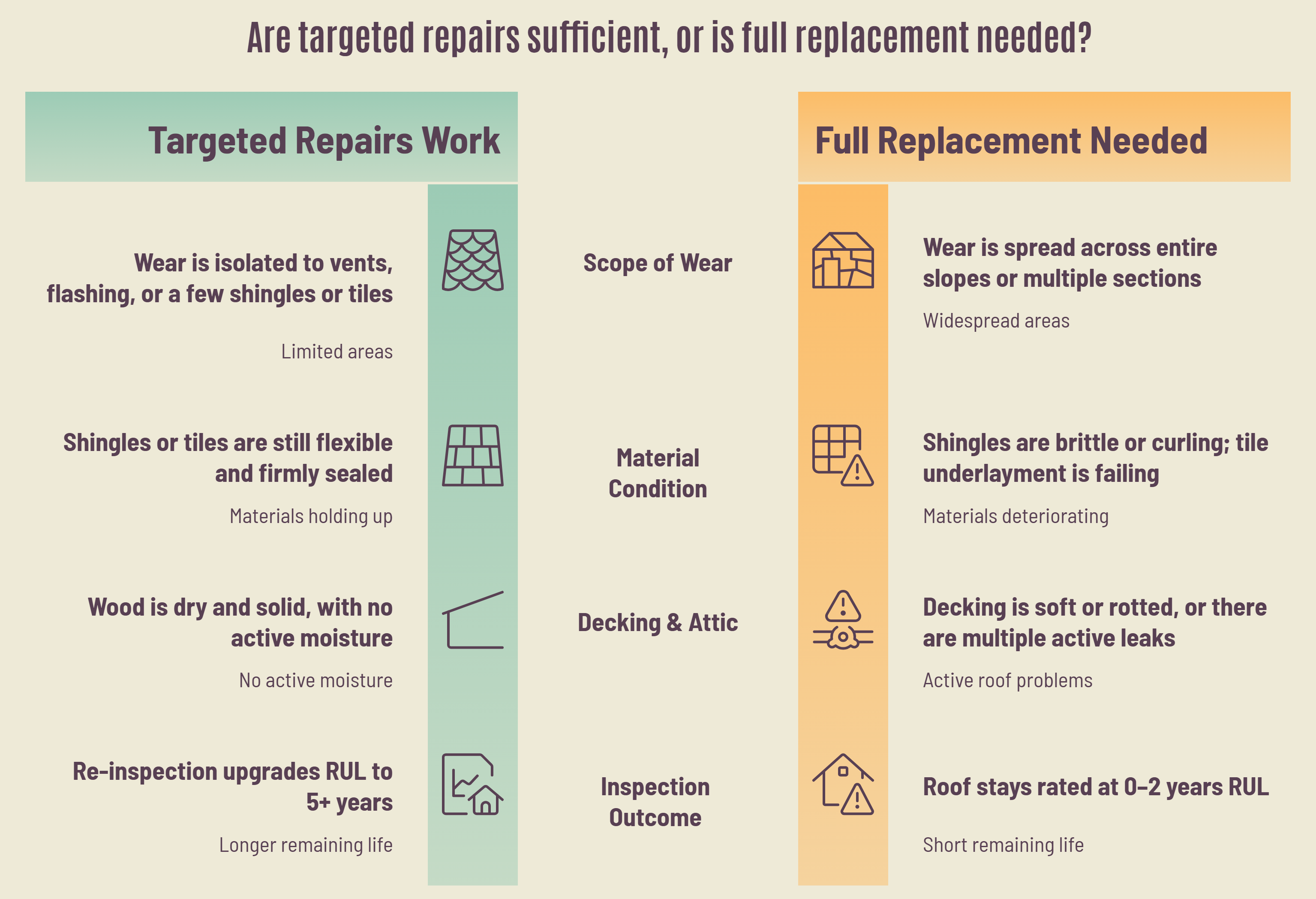
When Repairs Are Enough and When You Need a New Roof
The right answer depends on how widespread the problems are, not just on how old the roof is.
Get Clear Answers About Your Roof
A remaining useful life inspection does not have to be stressful. With the right preparation and an assessment, you can decide whether a repair or a replacement makes the most sense for your home and budget.
For over 40 years, Competent Roof Services has helped South Florida homeowners in Lake Worth, Wellington, Boynton Beach, and across Palm Beach County understand their roofs and meet insurance requirements.
As a licensed roofing contractor, Competent Roof Services can inspect your roof, document its condition for your insurer, and handle any repairs the report calls for. Call us at +1 (561) 782-3835 or just drop your inquiry, and we will get back to you.